Most calls for pest control service Lexington Park homeowners place come in after dark: mouse droppings under a kitchen sink in Patuxent Park, camel crickets in a Carver Heights basement, mud tubes on a foundation wall in Wildewood, or ants marching the counter in a Chancellors Run Estates kitchen. We answer the phone, put eyes on the problem, and quote from what the flashlight actually finds — entry points, moisture sources, and the conditions feeding the infestation — not from a guess over the phone.
No forms — call now for a fast, no-pressure quote.
📞 Call (240) 871-4139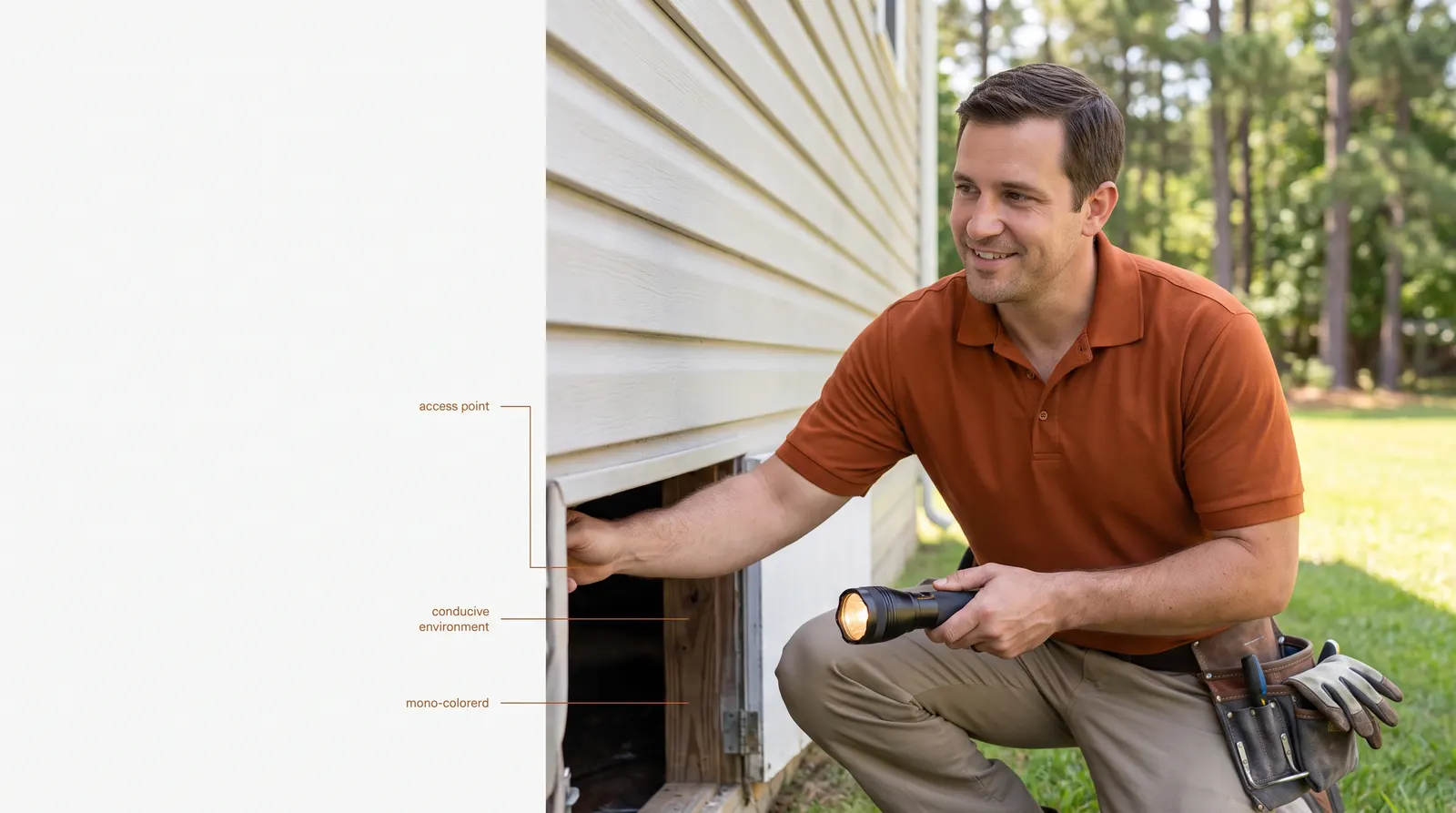
Pest control service in Lexington Park is a professional inspection, treatment and exclusion process that identifies the specific pest, treats the nest or harborage, and seals the entry points around a home, rental unit or crawlspace in St. Mary's County so the same pest does not come back next season.
Every service reflects the same meticulous attention to detail — whether it's a single job or a larger pest control service project across Lexington Park.
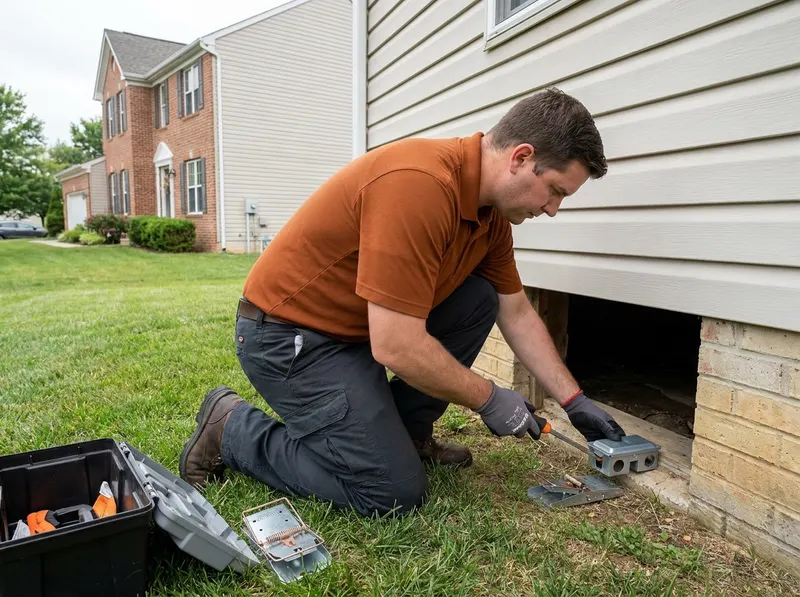
Mouse and rat work for Lexington Park homes, crawlspaces and garages, starting with a full exterior inspection for the openings rodents actually use — crawlspace vent screens, dryer vent lines, garage door bottom corners, sill plate gaps and utility penetrations. We set traps and monitoring in the interior runways, then handle exclusion so the next cold snap does not push a new group in. Rodent calls climb sharply October through December as mice leave field edges and wooded lots off the Three Notch Trail corridor. Pest Defense treats rodent activity in Lexington Park, MD as a sealing job first and a trapping job second.
View details →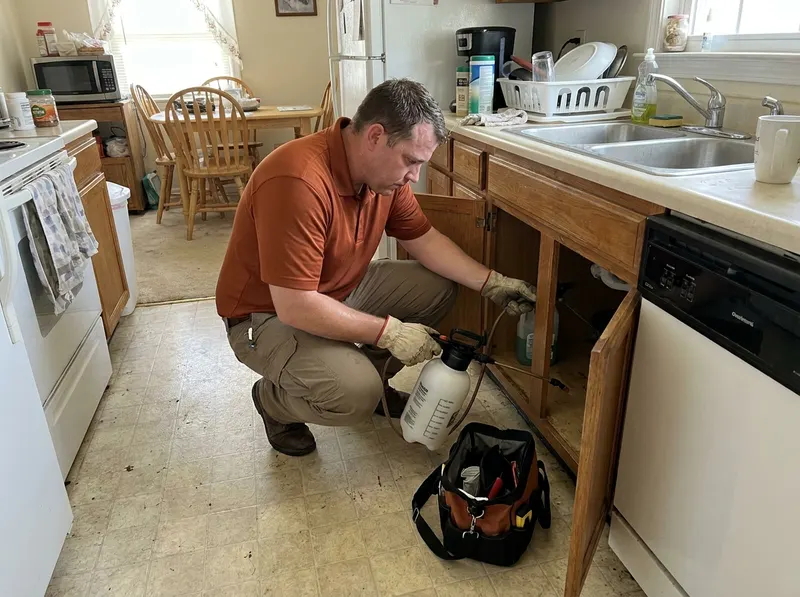
German cockroach and American cockroach treatment for kitchens, apartments and rental turnovers. German roach work is precision work: gel bait in hinge points and motor housings, growth regulator, and follow-up visits two to three weeks apart because eggs hatch after the first treatment. We inspect under sinks, behind dishwasher panels and along cabinet toe kicks to find the harborage instead of fogging a room. Roach pressure in Lexington Park's apartment stock runs year-round with no true off-season, which is why single-visit promises rarely hold.
View details →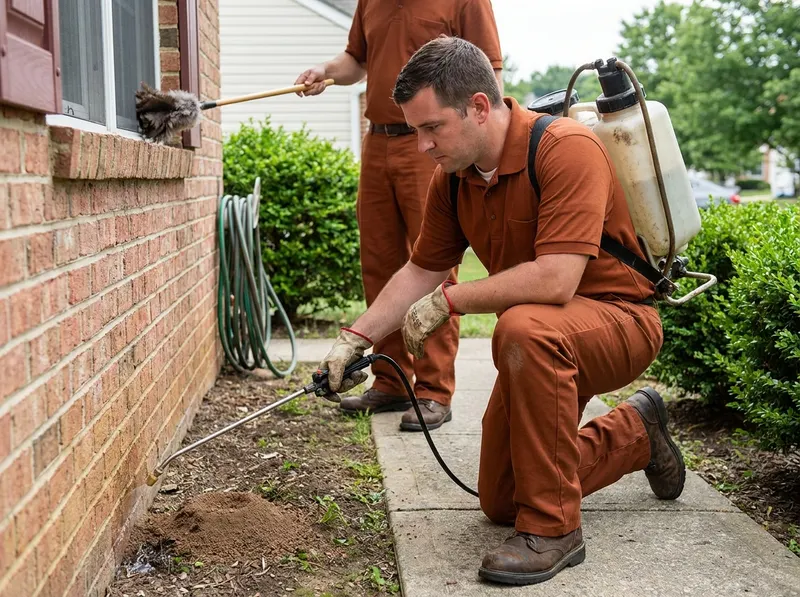
Odorous house ants, pavement ants, carpenter ants and acrobat ants, identified by species before anything is applied — because the treatment differs. Odorous house ants get non-repellent transfer baiting so foragers carry it back to satellite colonies; carpenter ants get the moisture-damaged wood and the parent nest traced, often at a deck ledger, window header or roofline. Ant activity climbs from April into June as spring rains push colonies toward foundations and kitchens across Greenview Knolls, Esperanza and Town Creek.
View details →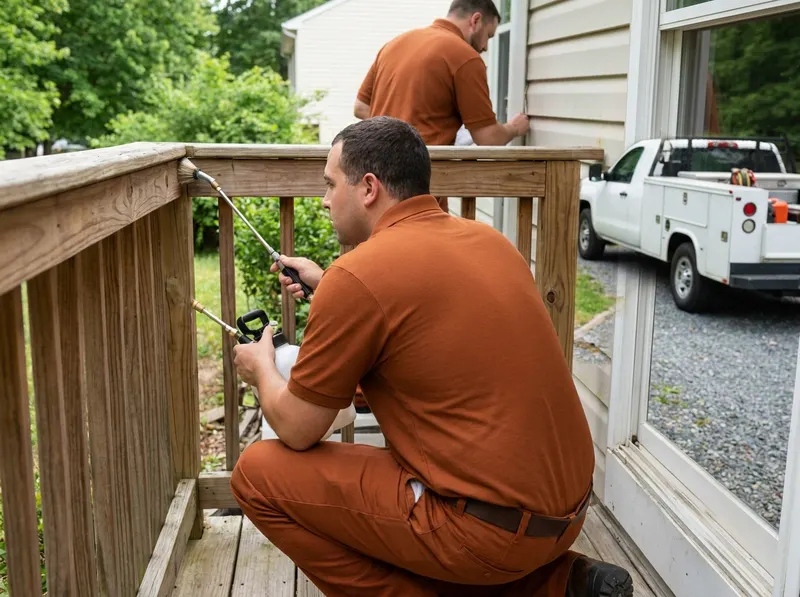
Perimeter and interior spider treatment for wolf spiders, cellar spiders, house spiders and the occasional black widow in a garage or shed. Spiders follow their food, so treatment covers the insect population around exterior lighting, soffits, window frames, deck framing and basement window wells, plus web knockdown at eaves and porch corners. Homes backing to tree lines near Lexington Manor Passive Park and Bay Forest see the heaviest pressure from late summer through October.
View details →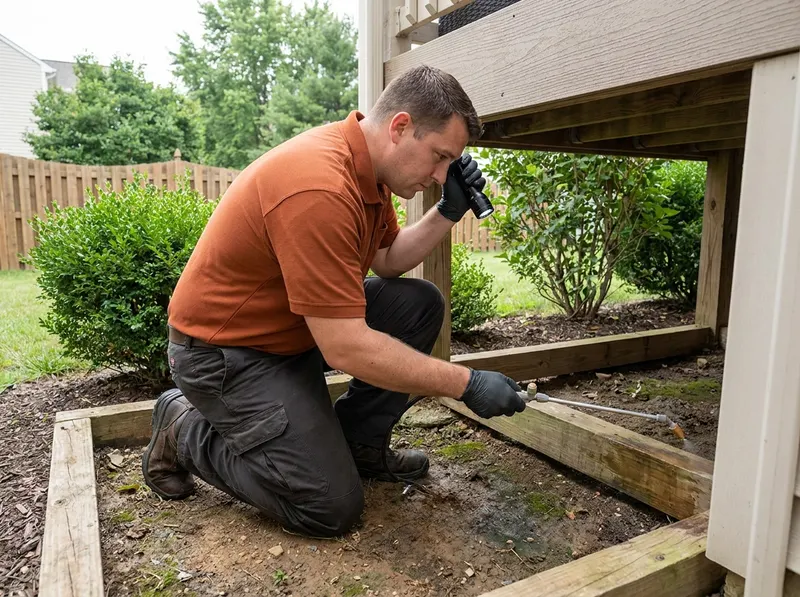
Camel crickets — the jumping "spider crickets" in basements and crawlspaces — are a Southern Maryland humidity problem, not a cleanliness problem. Treatment covers the crawlspace and basement perimeter, sill plate line, window wells and exterior grade, and includes naming the moisture and grade issues feeding them. The same visit addresses earwigs, silverfish, millipedes, centipedes and clothes moths, which share the same damp harborage in Lexington Park's mid-century slab and crawlspace homes.
View details →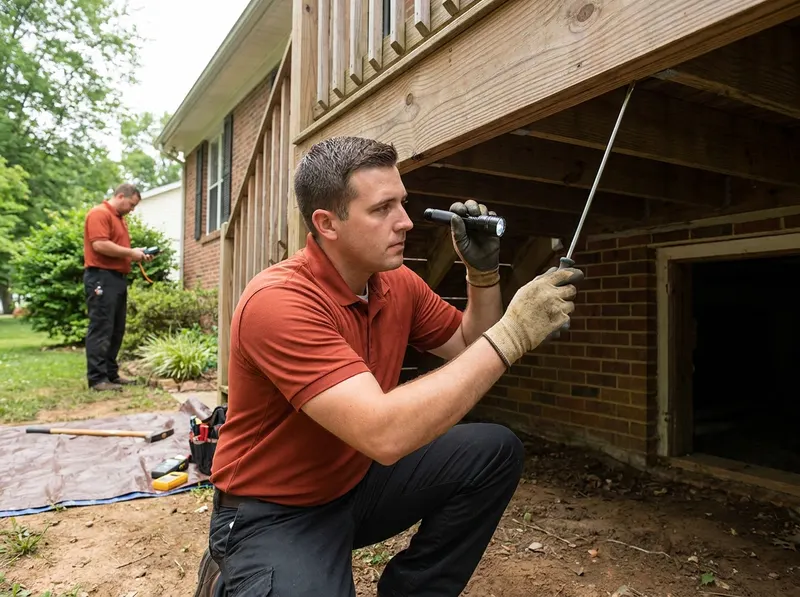
Wood-destroying insect inspection with a written NPMA-33 (WDI) report, the form requested for VA-financed and conventional home sales throughout St. Mary's County. The inspection covers accessible foundation walls, crawlspace joists and piers, sill plates, garage slab expansion joints, exterior trim and any mud tubing, damaged wood or swarmer wings found. Termite inspection requests in Lexington Park spike March through May with swarm season and again May through August with the Pax River PCS rotation — book one to two weeks out in those windows.
View details →Pest control service in Lexington Park is a professional inspection, treatment and exclusion process that identifies the specific pest, treats the nest or harborage, and seals the entry points around a home, rental unit or crawlspace in St. Mary's County so the same pest does not come back next season.
You get a firm, itemized quote for your pest control service before any work begins — no surprises, no pressure.
Careful prep, tidy work, and a full cleanup when we are done. We treat your home and belongings like our own.
The same trusted, background-checked team from the first call to the final check.
The right plan depends on what you are actually fighting, and the honest answer is not always the biggest program. If you have one clear problem with a start and an end — carpenter ants on a deck ledger, a wolf spider population in a Cedar Cove garage, silverfish in a bathroom — choose a one-time targeted treatment at $250 to $375. If the same pest keeps returning every spring and fall regardless of what you spray, choose a quarterly perimeter program at $250 to $325 per visit; the trade-off is a recurring cost versus a treated barrier that is renewed before each seasonal push instead of after the pests are already inside. Quarterly programs here are cancelable — we do not lock anyone into a term they cannot end. For termites, the choice is between two real methods. If you want a treated soil barrier that kills workers on contact and protects a specific foundation line, choose liquid soil treatment ($1,200 to $2,800): trenching and rodding along the footer, with drilling through slab or patio concrete where the foundation is not accessible. If you want ongoing monitoring around a home with heavy landscaping, a shallow water table, or additions that make trenching impractical, choose a bait station system ($900 to $1,800 for install and the first year of monitoring), which works through colony elimination over weeks. The trade-off is speed versus visibility — liquid gives you an immediate barrier you cannot see working, while bait stations give you documented activity checks but need patience and scheduled re-inspection. Homes with a known active infestation and a closing date usually need liquid; homes doing long-term prevention on a wooded lot often do better with baiting. Rodents split the same way. If you want the population knocked down fast, trapping and monitoring does that in one to three weeks. If you want it to stay down, the exclusion work — sealing crawlspace vents, garage door corners, sill plate gaps and utility penetrations — is the part that matters, and it costs more up front. The trade-off is paying once for sealing versus paying repeatedly for bait every autumn when field mice move in from the tree lines. Is a quarterly program worth it if I only see pests twice a year? Usually yes in Lexington Park, because the two annual invasions — spring ants and fall crickets and stink bugs — are exactly what a maintained perimeter is designed to intercept. Can I skip the inspection and just book a spray? You can book a treatment, but we still inspect first; treating an odorous house ant trail the same way as a carpenter ant colony wastes your money, and a moisture source behind a shower wall will re-seed pests no matter what gets sprayed indoors.
Every project gets a firm, written price after a free on-site visit. Ranges below for orientation.
Tell us about your pest control service job and we'll send a clear, written quote — usually the same day. Or just call and talk to a real Lexington Park pro.
(240) 871-4139Free estimates for Lexington Park & the surrounding area.
 Vexora Pest Defense