Spiders in Lexington Park are a symptom before they are a problem. Cellar spiders strung across a basement ceiling in Patuxent Park or Carver Heights are eating camel crickets that came in through a crawlspace vent.…
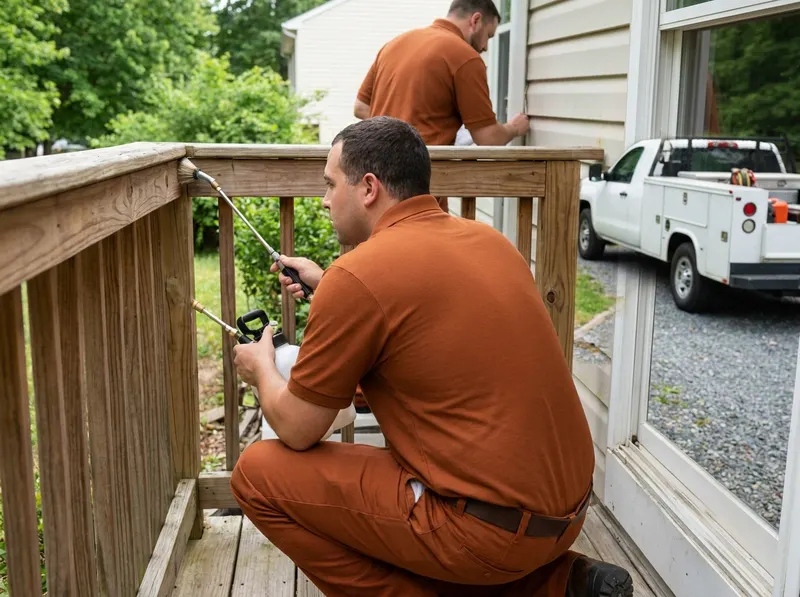
Spiders in Lexington Park are a symptom before they are a problem. Cellar spiders strung across a basement ceiling in Patuxent Park or Carver Heights are eating camel crickets that came in through a crawlspace vent. Wolf spiders crossing a Greenview Knolls kitchen floor in October are following the same moisture and the same gaps under the door sweep. Orb weavers rebuilding nightly on a Wildewood porch are working a light fixture that pulls in moths every evening. That is why a spider visit here reads like an inspection report: species, web locations, entry points, food source, moisture source — then the treatment.
Homes on wooded lot lines carry the most pressure. Properties backing to tree lines near Town Creek, Bay Forest and Cedar Cove, and lots along the Three Notch Trail corridor, get steady traffic from outdoor hunting spiders that overwinter in siding seams and unheated garages. Slab-on-grade construction common across Chancellors Run Estates and Hickory Hills pushes activity to the perimeter and the garage instead of a basement. Crawlspace homes in Esperanza and older Lexington Park streets tend to produce the cellar-spider and wolf-spider complaints, because Chesapeake humidity keeps the subfloor damp enough to hold their prey year round.
One visit fits a home with a defined problem: a porch, a garage, a basement corner, a fall push after the first cold nights. A quarterly perimeter program fits homes with a wooded lot line, a rental unit turning over between Pax River tenants, or a repeat pattern of webs returning every September — because the exterior band has to be maintained, not sprayed once. The trade-off is honest: a single visit costs less today and clears what is present, but if camel crickets, moths and stink bugs keep arriving, the spiders return with them. A program costs more across a year and holds the line instead. No blanket indoor fogging is used for spiders — it does not reach webs behind stored boxes and does not touch the outdoor conditions producing them.
Species identification matters for what happens next. Black widows do turn up in Southern Maryland garages, sheds, crawlspace piers and stacked firewood, and those get dewebbing plus a direct spot treatment of the harborage. Brown recluse spiders are not considered established in Maryland, so a bite-like mark is not automatically a recluse, and no honest technician will tell you it is. Expect the report to also name the fixable items — a torn crawlspace vent screen, a missing garage door bottom seal, gutter overflow soaking a foundation corner, or exterior lighting that feeds the food chain every night.
Every job gets a firm, written price after a free on-site visit.
Tell us about your spider control job in Lexington Park and we'll send a clear, written quote — usually the same day.
 Vexora Pest Defense